
How to Choose a Grooming Tools Supplier for Your Business
Choosing a grooming tools supplier affects more than your purchase price. It shapes the products you can offer, the information your sales team can explain, and the support you can provide after an order reaches customers.
For wholesalers, distributors, and private label brands, the strongest fit is usually a supplier whose product configurations and working process match the business. This guide explains what to review before expanding a range or launching a new collection.
Match the Range to Your Sales Channel
A barber supply distributor may need clippers, detail trimmers, foil shavers, and coordinated combos. A retailer focused on personal care may also need body trimmers and multi-attachment grooming kits. A large catalogue is useful only when the products fit the customers you serve.
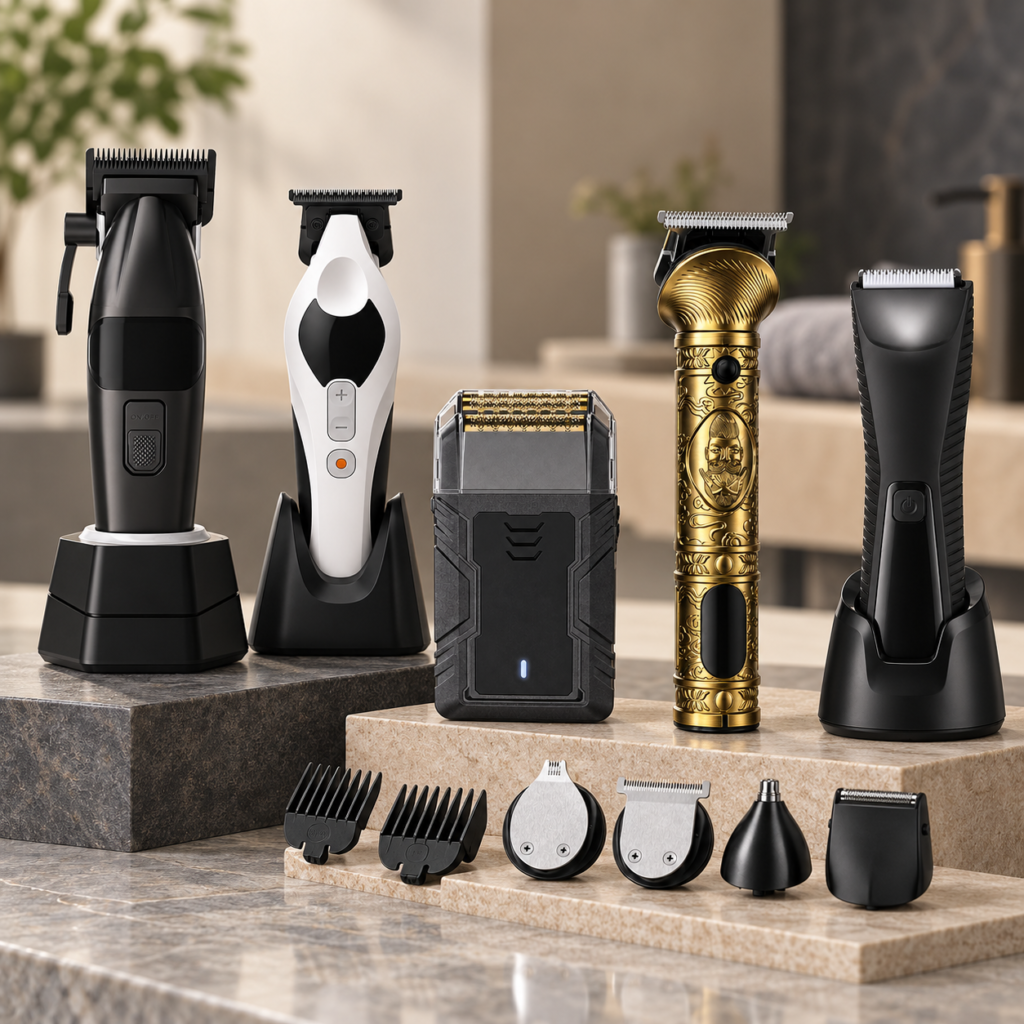
GENTANT offers hair clippers, hair trimmers, foil shavers, body trimmers, grooming kits, barber combos, and accessories. CORE, PRO, and ELITE provide collection tiers within the clipper, trimmer, and barber combo ranges. Other categories should be assessed through their own configurations rather than forced into the same series labels.
Start with a manageable product selection. A smaller, well-understood range can be easier to explain, stock, and support than several overlapping models with unclear differences.
Ask for Specifications You Can Explain
Check whether the supplier distinguishes motor speed, battery capacity, runtime conditions, blade materials, and charging requirements. “Powerful,” “professional,” and “high torque” are not substitutes for a complete specification.
A DC power supply does not tell you whether the motor is brushed or brushless. Likewise, a vector label does not, by itself, establish automatic torque compensation. Ask how the exact configuration behaves under load and whether the claim is supported by suitable evidence.
This clarity matters commercially. Your sales team needs to describe differences accurately, and your customer service team needs information that matches what was shipped.
Review the Everyday Working Experience
Include handling in sample selection. Clipper-over-comb, blending, and outline work involve different hand positions, so consider balance, grip shape, lever access, switch placement, and visibility of the blade.
A textured grip may support a more secure hold in some conditions, but the finish and geometry should be evaluated with intended users. Do not assume heavier means better quality or lighter means more comfortable for every barber.
The GENTANT HT-E01 and BC-E01 feature angular white-and-black housings and coordinated visual details. BC-E01 pairs a clipper with a trimmer, giving buyers a way to review matching presentation alongside the different tasks of bulk cutting and detail work. Distinctive design should complement practical handling, not replace it.
Treat Charging Bases as Part of the Configuration
Charging stands can help organize tools and make storage between services convenient. Compare base stability, contact engagement, cable routing, and the space needed on a real workstation.
Ask whether the base charges or only supports the product. Confirm included cables, adapters where supplied, and the required electrical input. A stand’s lighting effect does not establish charging speed.
Also plan replacement access. A lost cable or damaged base can become an after-sales issue even when the tool itself remains usable. Establish available options before advertising a long-term service promise.
Compare Partnership Routes
GENTANT supports inquiries for branded wholesale, distribution, and OEM/ODM or private label projects. These routes meet different needs: selling an existing brand differs from developing your own packaging or requesting component changes.
Clarify territory, channels, exclusivity where requested, artwork responsibilities, and the use of product images. Do not assume an inquiry creates exclusive distribution rights or that customization options are identical across models.
Ask for model-specific MOQ and lead-time information. Colors, printing, packaging, tooling, and component changes can affect both. A transparent quotation should distinguish confirmed terms from estimates and items still awaiting approval.

Look Beyond Certificates and the First Shipment
Review the company behind the brand, its manufacturing background, and the documents relevant to the selected configuration. Our company, based in Ningbo, China, has developed and manufactured grooming tools since 2005 and is ISO 9001 certified.
Management-system certification and product compliance documentation serve different purposes. For regulated markets, confirm the relevant model coverage and responsibilities rather than treating one logo as universal approval. EU guidance on CE marking explains the manufacturer’s role in conformity assessment and documentation.
For ongoing supply, discuss replacement blades, accessory compatibility, communication about specification changes, warranty terms, and how verified issues will be handled. These agreed details provide a stronger basis for trust than an unsupported promise of unlimited support.
Send a Brief That Makes Comparison Easier
When contacting GENTANT, include your market, sales channel, product categories, estimated order quantities, price position, and branding requirements. Add any must-have functions and documentation needs. This helps turn a general supplier search into a focused discussion of products and a practical next step.