
Magnetic and Vector Clipper Motors: Beyond the RPM Numbers
A barber moving from fine hair around the temples to dense hair at the crown needs a tool that remains controllable as cutting resistance changes. For a distributor or private label brand, that makes motor behavior under load more useful than a large RPM figure on the box.
Terms such as magnetic motor, vector motor, high-torque motor, and magnetic levitation appear across professional grooming ranges. They are not interchangeable specifications. This guide explains what buyers should ask and how GENTANT configurations can fit a purchasing discussion.

Start with the Motor Architecture
A brushed DC motor uses brushes and a commutator. A brushless DC motor uses electronic commutation. Both can be designed for different combinations of speed, torque, size, and cost. Neither the presence of a DC supply nor a high speed figure establishes which design is inside a clipper.
Traditional magnetic clipper motors can use electromagnetic action to produce reciprocating blade movement. That motion should not automatically be compared with a rotary motor using the same RPM label. Ask whether a supplier is quoting shaft speed, blade strokes, or another measurement.
Vector control has a specific engineering meaning: it is a method of controlling motor currents and torque, rather than a universal mechanical motor shape. Analog Devices explains the relationship between field-oriented control and vector control. A product marketed as a vector-motor clipper still needs its own technical specification; the name alone does not prove a particular control algorithm.
Likewise, a magnetic-levitation claim needs evidence about the actual suspension or bearing arrangement. Buyers should not assume that a magnetic or vector product has a rotor floating without mechanical support.
What Does High Torque Mean for Cutting?
For rotary systems, torque is the turning effort available to drive the mechanism. Cutting performance also depends on blade travel, tooth geometry, sharpness, alignment, lubrication, and feed rate. High no-load speed cannot substitute for those factors.
When a tool meets denser hair, a suitable controller may adjust electrical input to support cutting. However, this is a model-specific capability, not a promise that every vector-labeled tool automatically increases torque. Nor can a controller supply unlimited power: battery output, current limits, and temperature protection set practical boundaries.
A useful supplier demonstration includes repeated passes through representative hair under consistent conditions. Watch for pulling, changes in cutting sound, hesitation, and the need for extra pressure. Do not push the tool harder to conceal a poor blade setup.
Battery and Blade Choices Still Matter
A motor platform intended for demanding cutting needs a compatible battery and protection system. Capacity in mAh helps describe the battery, but discharge capability, voltage, usable energy, and the operating load also affect the result.
Compare runtime figures only when the test conditions are explained. A stated duration may describe operation without cutting hair, and a high-speed setting may draw differently from a lower setting. Ask how the tool behaves at low charge rather than assuming the final minutes feel identical to a full battery.
Blade selection also matters. A low-friction coating does not correct poor alignment, and a powerful drive does not eliminate the need for lubrication. Evaluate the complete combination before choosing a premium specification for a catalogue.
GENTANT Examples for a Professional Range
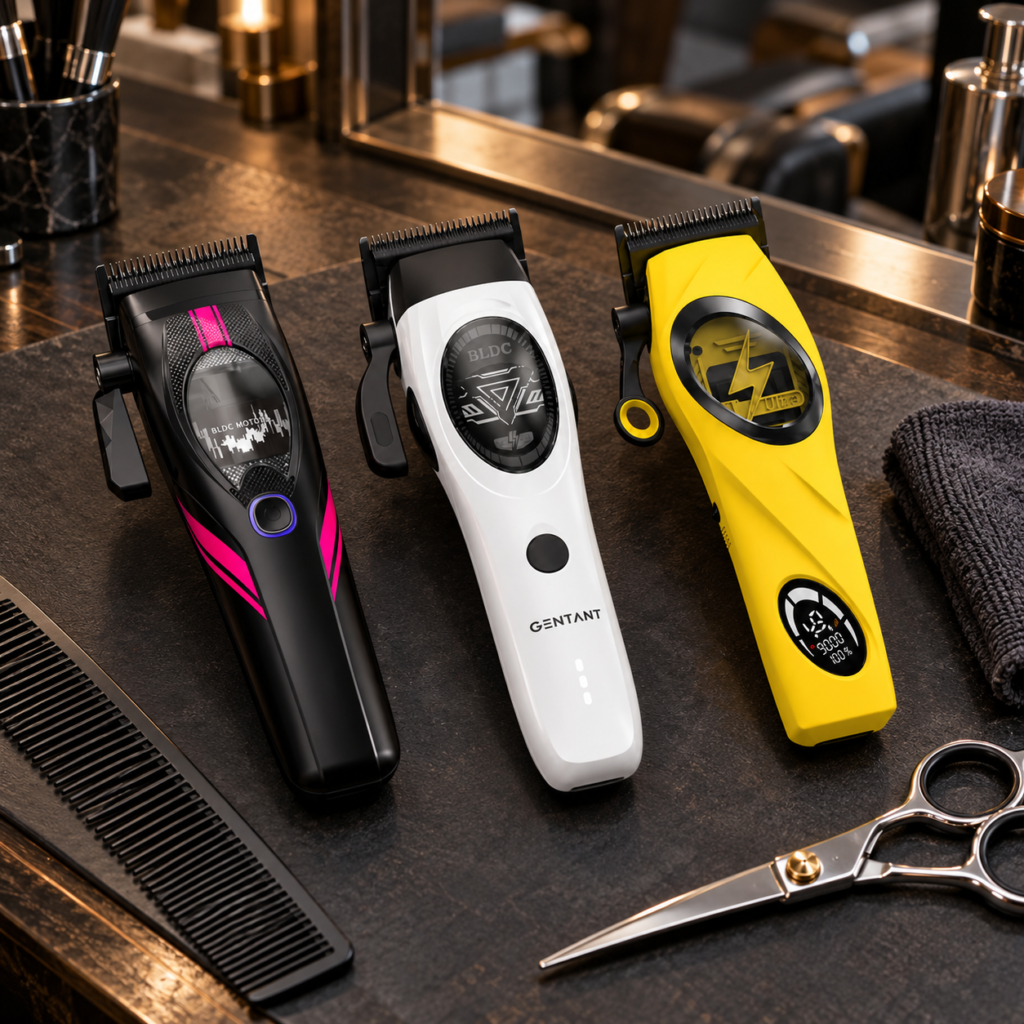
The GENTANT ELITE HC-E03 specification identifies a microchipped magnetic vector motor, a DLC-coated fixed blade, and a 2,600mAh battery. Its supplied configuration includes ten guide combs. Buyers can evaluate this combination when reviewing a professional clipper range.
The GENTANT ELITE HC-E11 is specified with a dual-coil vector motor, a 3,200mAh battery, and a charging stand. It offers another configuration to discuss where workstation organization and battery capacity are important purchasing considerations.
These descriptions follow GENTANT’s product records. They do not establish a measured torque advantage, automatic load compensation, or a magnetic-levitation bearing system. Request the model-specific operating details and evaluate samples against your requirements.
Questions to Include in a Sample Review
- What motor architecture and controller are supplied in this exact configuration?
- What does the advertised speed measure, and is it a no-load figure?
- Is load-responsive control included, and how is it demonstrated?
- How do cutting behavior, vibration, and blade temperature change during repeated use?
- Are replacement blades, combs, and charging components available for this model?
- Can the agreed configuration be identified consistently in production and packaging?
Choose a Cutting System, Not a Motor Slogan
The right professional clipper should suit the hair types, working habits, and price position of its intended users. Motor terminology is a starting point; sample performance and clear specifications turn it into a purchasing decision.
Contact GENTANT to discuss HC-E03, HC-E11, and other clipper platforms for wholesale, distribution, and private label projects. Tell us your target market and required cutting tasks so the discussion can focus on a suitable configuration.